
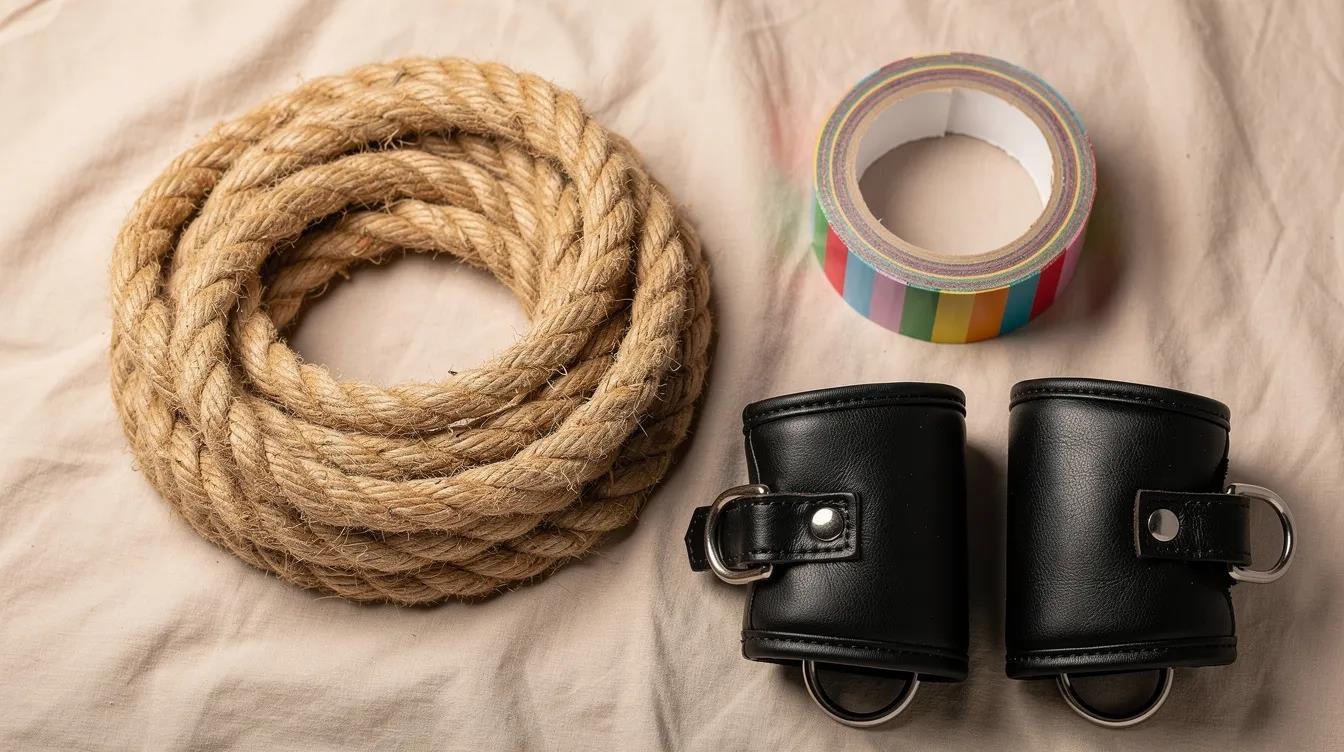
Choosing your first bondage restraint can feel overwhelming when you're staring at rope, tape, and cuffs without knowing which one actually suits your experience level. The truth is, there's no universal "best" option. Each format works differently, feels different on the body, and demands a different level of preparation. This guide breaks down bondage rope vs tape vs cuffs across skill requirement, comfort, cleanup, adjustability, and release so you can make an informed decision before your first session.
Key Takeaways
- There is no single best beginner restraint. Cuffs are usually the easiest to use, bondage tape is the most spontaneous, and bondage rope is the most flexible but demands the most technical skill.
- Bondage tape is often safer than improvised household tape. It sticks only to itself, not skin or hair, and requires no knot knowledge. Cuffs are the most beginner-accessible restraint option available, while rope demands extra safety education around nerve paths and circulation checks.
- Your best choice depends on your first session plan, communication style with your partner, and how much time you're willing to invest time in learning rope technique or other methods.
- This article compares all three formats across skill, comfort, cleanup, adjustability, and release speed.
- You don't need prior BDSM experience to start-just preparation, consent, and basic safety tools like safety scissors.
The Short Answer: Which Beginner Restraint Should You Choose?
There is no single "best" restraint for everyone. If you want a simple, low-commitment trial, bondage tape lets you experiment without learning any knots or buying expensive gear. If you want immediate, reliable restraint play with predictable release, padded cuffs (wrist restraints and ankle cuffs) are the most accessible option. If you're drawn to visual styling, artistic patterns, and the meditative process of tying, bondage rope delivers the most creative range-but requires the most preparation.
- Bondage tape: best for spontaneous, first-time experimentation with a partner. A standard roll costs $10–20 and can be applied and removed in seconds.
- Cuffs: best as a straightforward beginner restraint. Cuffs are the easiest to use out-of-the-box and provide an instant secure fit with quick-release mechanisms.
- Bondage rope: best for those willing to invest time in learning safe technique and who want endless aesthetic possibilities.
- Beginners with anxiety about being completely immobilized often feel safer starting with cuffs or tape because of their easy, predictable release mechanisms.
This section is your quick decision summary. The deeper detail lives in the sections below.
What Actually Differs Between Rope, Tape, and Cuffs?
All three are bondage restraints designed to restrict movement, but they work in fundamentally different ways-mechanically, tactilely, and psychologically.
- Bondage tape is a self-adhering strip (typically PVC tape or fabric) that sticks only to itself, not skin or hair. It behaves more like a flexible wrap than like duct tape or ordinary adhesive tape. Rolls are commonly 5 cm (2 in) wide and 10–20 m long, and one roll is enough for several light scenes.
- Bondage rope consists of reusable lengths (often 7–10 m per piece, 6–8 mm diameter) that restrain via rope knots, friction, and body placement. This allows highly customizable layoutsfrom a simple wrist tie to decorative breast bondage harnesses or full-body wraps.
- Cuffs are wearable restraints-usually leather cuffs, faux leather, or neoprene-that rely on sizing, padding, and closure hardware (buckle, Velcro, or locking mechanism) to secure wrists or ankles. Many feature D rings for connecting to bondage furniture, spreader bars, or under-bed straps.
- The real difference for beginners lies in skill requirement, how easy it is to adjust and release, and how precisely you can control pressure on nerves and blood flow.
Safety Foundations for Any Beginner Restraint
Choosing gear is only half the job. The other half is consent, communication, and basic BDSM safety practice in every scene.
- Establish a clear stop signal. Before play begins, agree on a safe word and a non-verbal communication signal (like dropping a held object or tapping three times). This is critical if the
mouth may be covered later. Always establish a clear safe word or non-verbal communication signal before using any restraint.
- Perform circulation checks. Slide two fingers between the restraint and skin to verify fit. Watch fingers and toes for color changes (pale or bluish), temperature drops, tingling, or numbness. Check circulation frequently during restraint scenes-every 5–10 minutes is a solid baseline.
- Keep safety scissors nearby. Rounded-tip medical or EMT trauma scissors must be within arm's reach at all times during BDSM play, regardless of whether you're using tape, rope, or cuffs. Always have safety shears within arm's reach for rope or tape play.
- Avoid high-risk positions. Stay away from ties around the neck, chest compression that restricts breathing, and positions that strain joints. Beginners should avoid suspension or partial suspension entirely. Keep the person restrained in a comfortable position-lying down or seated.
- Never leave a restrained partner unattended when using bondage materials for the first time. Stay present, stay attentive, and keep scenes short enough that you can monitor comfort continuously.
Bondage Tape: Simple, Compact, and Beginner-Friendly
Bondage tape is a self-adhering, non-glue PVC or fabric strip designed specifically for restraint play, not household tasks. Ensure you buy specifically designated self-adhesive bondage tape rather than ordinary adhesive tape-the difference matters enormously. Bondage tape sticks only to itself, not to skin or hair, which means removal is painless and leaves no residue. Duct tape, packing tape, and other household alternatives can strip skin, pull hair, and leave aggressive adhesive behind.
- Common formats: 2 inch (5 cm) wide PVC bondage tape rolls around 20 m long, plus softer fabric options that trade some grip for breathability and comfort. A standard roll costs $10–20.
- Why it appeals to beginners: no knot knowledge needed, quick to wrap on, compact for travel, and bondage tape is ideal for beginners due to its simplicity. Bondage tape is faster to apply and remove than rope by a wide margin. Can bondage tape handle real restraint? Yes-layered wraps create surprisingly firm holds.
- Key safety points: bondage tape should never restrict breathing or cause panic. Avoid wrapping around the neck or over nose and mouth. Don't pull it wrapped tightly in a single pass-prioritize multiple light layers over one tight layer for safer, more control over pressure points.
- Typical use cases: wrists in front, ankles together, simple thigh wraps over clothing, or light breast bondage for visual effect rather than heavy immobilization. Bondage tape is reusable for multiple scenes if it stays clean, though most practitioners treat it as semi-disposable after contact with sweat or lube.
Bondage Rope: Maximum Flexibility, Higher Skill Requirement
Rope bondage is the most flexible and visually customizable restraint type, but it carries the steepest safety and technique learning curve. Rope bondage requires significant preparation and skill-you can't just grab a length and start tying safely without understanding body mechanics. That said, bondage rope offers the highest level of artistic and sensory versatility among all restraint formats.
- Beginner rope materials: cotton rope is soft and easy to wash, making it forgiving for a first session. Jute and hemp are traditional in Japanese Shibari-style rope bondage and offer higher friction with a more textured feel. Synthetic blends come in bright colors and resist moisture but can be slippery, making rope knots less reliable under load.
- Anatomy awareness is mandatory: safe rope use requires learning about nerve paths-the radial nerve at the upper wrist, the ulnar nerve near the elbow, and the peroneal nerve near the knee. Knowing these matters more than memorizing pretty patterns from photos. Injury risk climbs fast when ropes compress near joints.
- Reusability and longevity: rope lasts a long time when properly cleaned, dried, and stored coiled or hung. Inspect regularly for fraying or knots that no longer slide. Hemp and jute ropes may need occasional conditioning with natural oils to stay supple.
- Stick to basics: beginners should focus on non-suspension, floor-based ties-single-column and double-column ties for wrists and ankles, or a simple body harness. Leave advanced positions, suspension, and complex rope technique to later, after dedicated rope study with reputable instructors.
Rope allows for endless creativity in bondage, but that creativity is only safe when paired with knowledge.
Cuffs: The Most Accessible Beginner Restraint Format
Padded wrist and ankle cuffs are often the best beginner restraint because they come pre-shaped, adjust with simple hardware, and require the least technical skill. Cuffs are the most beginner-accessible restraint option-you open the package, size them, fasten them, and you're ready.
- Types of cuffs: soft Velcro fabric cuffs marketed as beginner restraint sets; faux-leather cuffs with D rings for clipping to chains or other restraints; heavier leather cuffs with locking buckles for more serious BDSM scenes. Quality cuffs provide even pressure distribution and are generally safer than metal handcuffs, which can bite into wrists.
- What good cuffs feel like: broad bands that spread pressure evenly, a soft lining against skin, and edges that don't dig when one partner is pulling against the restraint. Bondage cuffs typically feature quick-release mechanisms for safety and ease of use-bondage cuffs can be removed in seconds for quick release.
- Sizing matters: cuffs must allow one to two fingers between the cuff and skin. Ankle cuffs are typically wider and larger than wrist cuffs to distribute pressure better at the ankle. Don't just extend wrist cuffs to fit ankles-use dedicated ankle cuffs.
- Connection points: cuffs shine when used with anchor points such as under-bed restraint systems, spreader bars, or bondage furniture like crosses and benches. Even simple bed frame clips work for a first session. A bondage collar can function as both a restraint and a psychological anchor, adding to the power exchange dynamic without requiring complex technique.
Core Comparison: Skill, Comfort, Cleanup, Adjustability, and Release
Here's how the three formats stack up across the five dimensions that matter most for beginners.
Skill requirement: Cuffs demand the lowest skill-correct sizing and buckling is essentially all there is. Bondage tape sits in the middle, requiring judgment about wrap tension and layering but no knots. Rope sits highest, demanding knowledge of rope knots, anatomy, and body mechanics. Most beginners find cuffs and tape are usually easier to manage compared to rope, which offers greater creative possibilities.
Comfort: Cuffs are often the most comfortable if padded and correctly sized, suitable for long wear sessions. Wide bondage tape is comfortable for short scenes but can compress during extended play. Rope comfort varies dramatically with material, placement, and tension-cotton feels different from jute, and a well-dressed tie feels nothing like a hasty knot.
Cleanup: Tape produces disposable waste but involves the fastest cleanup. Rope requires coiling, thorough drying (to prevent mildew in natural fibers), and occasional washing. Cuffs need wiping down after contact with sweat or lube, and leather cuffs benefit from periodic conditioning.
Adjustability: Rope is the most adjustable mid-scene-you can add wraps, shift positions, or change patterns. Tape offers moderate adjustability by adding layers. Cuffs offer the least on-the-fly customization but the most consistent, repeatable fit.
Release speed: Cuffs win here-Velcro opens instantly, buckles take seconds. Bondage tape unwinds or can be cut, but stacked layers may take a moment. Rope can release fast with safety shears or by pulling the right ends, but it's the slowest if heavily knotted. Bondage tape is faster to apply and remove than rope in nearly every scenario.
When to Choose Tape, When to Choose Rope, When to Choose Cuffs
Think of this as a beginner decision tree. Your goals determine the best format.
- Choose tape if you're a first-time bondage-curious couple, playing in a hotel or travel scenario needing discreet gear, want fast application and easy cleanup, or want to test feelings about light restraint before investing in cuffs. One roll of tape and a pair of safety scissors is a complete starter kit.
- Choose rope if you're drawn to aesthetics, decorative breast bondage, karada-style body harnesses, or the meditative tying process. Choose rope when you're willing to invest time in learning safe techniques and want different styles of visual expression. Rope rewards patience with unmatched creative range.
- Choose cuffs if you prioritize reliability, repeatability, and consistent fit. Cuffs make sense when you're planning to connect restraints to anchor points like bed frames and bondage furniture without fiddling with knots or tape every session. They provide more structure and predictable control.
- Many couples start with cuffs and tape, then gradually introduce simple rope ties once they have trust, communication habits, and safety routines firmly in place.
Rope-Specific Safety Limits and First Session Ideas
Rope can hide nerve damage and circulation problems more easily than cuffs or tape, making cautious first sessions especially important. Every person who practices rope bondage should understand these limits.
- Hard limits for beginners: no neck ties, no suspension or partial suspension, avoid tying elbows tightly together behind the back, and avoid any tie that can cinch tighter when the person moves or shifts body weight. These restrictions aren't optional.
- Simple first-session options: a front-of-body wrist tie using a double-column tie, ankles loosely tied together while seated in a comfortable position, or a soft, wide rope chest harness that doesn't compress the ribcage. Keep everything low to the ground.
- Frequent circulation checks: with rope especially, check color, temperature, and sensation around wrists and ankles every few minutes. If fingertips go pale or numb, loosen immediately. Don't restrict circulation-ever.
- Practice before the scene: practice tying on pillows, chair legs, or your own limbs before a real scene. This prevents fumbling that can break mood or compromise safety. A few hours of rope study at home translates directly into safer, more confident BDSM play.
Bondage Tape Materials and Safer Technique
PVC bondage tape delivers a shiny, classic look and strong hold. Fabric bondage tape offers a matte, softer finish that breathes better against skin. Material choice affects how the tape feels, how tightly it grips, and how much control you have over pressure.
- Why bondage tape is safer than duct tape: bondage tape lacks aggressive adhesive that pulls hair or skin, peels off smoothly, and is designed for skin contact when used correctly. Duct tape, electrical tape, and packing tape are not designed for bodies and can cause real harm.
- Proper wrapping technique: start with a light base loop, overlap each wrap by about half the tape width, and build strength through layers rather than cranking tension on a single pass. This gives you more control over how firmly the person is held.
- Avoid high-flex joints: keep tape away from knees and elbows unless wraps are intentionally loose. When joints bend, tight tape can cut into skin or restrict circulation at pressure points.
- Disposal and hygiene: dispose of stretched, wrinkled, or soiled tape rather than reusing it after contact with sweat, lube, or intimate areas. Fresh rolls are inexpensive-prioritize hygiene over savings. Follow product instructions on the packaging for best results.
Cuff Types, Fit, and How They Connect to Other Gear
Cuffs aren't just "handcuffs." They're a whole category of bondage restraints with different materials and closure systems tailored for comfort and safety across different styles of play.
- Soft fabric and neoprene cuffs: lightweight, affordable ($20–50 for a set), Velcro closure, ideal as a gentle beginner restraint that can be opened quickly with one hand. Perfect for a first session where one partner wants to feel secure without heavy gear.
- Faux leather and leather cuffs: more substantial feel and psychological effect, often with metal D rings for clips to chains, spreader bars, or bondage furniture. May include buckle closures or lockable posts for those wanting more intensity.
- Ankle cuffs: typically wider and larger than wrist cuffs to distribute pressure better at the ankle. Ideal for securing legs apart on spreader bars or tying to bed corners. Sizing is separate from wrist cuffs-don't assume the same product works for both.
- Connecting to gear: cuffs clip to under-bed restraint systems, wall anchor points, or St. Andrew's crosses via carabiners or snap hooks attached to D rings. Always check that anchors are sturdy and placed so they don't force the person into joint strain. The connection should allow some movement without pulling the body into unnatural angles.
Beginner Restraint Planning: Scenario-Based Suggestions
Here are practical examples mapping specific goals to gear choices.
- Simple first session at home: cuffs on wrists in front (hands visible, accessible), maybe ankle cuffs connected loosely to each other or bed corners. Keep bondage tape on hand for light decorative wraps over clothing if you want to add a visual element without complexity.
- Visual or photography-friendly plan: soft rope for a chest or hip harness that creates beautiful patterns. Complement with cuffs to handle actual load-bearing restraint, keeping complex rope away from joints where nerve damage could occur.
- Travel or hotel scenario: a small roll of bondage tape and a compact cuff set pack discreetly in a bag. No large bondage furniture needed-focus on easy cleanup and portability. Other materials like rope add bulk and require more maintenance in changing environments.
- Plans should stay low-strain: positions should be lying down or comfortably seated. Limit total restraint time. Include explicit verbal check-ins during the scene and dedicated aftercare time afterward-water, warmth, reassurance.
Care, Storage, and Longevity of Rope, Tape, and Cuffs
Caring for gear correctly extends its life and keeps it safer against failure-snaps, tears, or frays-during BDSM scenes.
- Rope care: shake out fibers after each use, air-dry completely if damp, and store coiled in a dry place away from sunlight. For natural fibers like hemp and jute, consider occasional oiling with a light mineral or jojoba oil. Retire rope that's badly frayed, stained, or has lost structural integrity. Treat rope as safety equipment, not just an accessory.
- Bondage tape storage: keep rolls in a cool, dry drawer away from direct heat or sunlight. Heat softens and degrades PVC tape and adhesives over time. Discard rolls that have fused together or lost their self-cling properties.
- Cuff maintenance: wipe down after each use with a mild cleaner or toy wipe, especially interior linings. Condition leather occasionally to prevent cracking. Check stitching, D rings, and buckles for wear before each use-hardware failure during a scene is dangerous.
- Build a dedicated bondage kit: store restraints, safety scissors, blindfolds, and basic aftercare items (a blanket, water, soothing lotion) together in one bag or box. This keeps scene prep fast and ensures nothing critical gets overlooked when play begins.
Common Beginner Mistakes (and How to Avoid Them)
Even with good intentions, first-timers frequently make avoidable errors. Here are the most common ones across tape, rope, and cuffs-with simple corrections.
- Over-tightening restraints: this is the most common mistake across all three formats. Two fingers should fit between the restraint and skin at all times. If you can't slide them underneath, it's too tight. Perform regular circulation checks-don't wait for your partner to complain.
- Using household tape instead of bondage tape: duct tape, electrical tape, and packing tape use adhesives designed for surfaces, not bodies. They pull hair, tear skin, and leave painful residue. Always use purpose-made bondage tape that does not stick to skin, only to itself.
- Skipping communication and aftercare: the biggest safety tool isn't scissors-it's talking. Prescene negotiation about limits and expectations sets the foundation. Post-scene debriefs plus physical aftercare (water, warmth, reassurance, a blanket) complete it. Don't skip either step.
- Copying advanced rope ties from photos without training: those dramatic images involve riggers with years of practice. Attempting complex positions without proper education risks serious nerve damage or worse. Start with simple, reversible ties and seek out reputable educational resources before advancing.
FAQ: Beginner Questions About Rope, Tape, and Cuffs
These questions cover practical concerns not fully addressed in the main comparison, based on what beginners commonly ask.
Is bondage tape safer than rope for a first session?
For most beginners, bondage tape is simpler and easier to use safely because it requires no knots and is less likely to create localized pressure points that could cause nerve damage. However, safety still depends on using loose wraps, performing circulation checks, and keeping tape away from the neck, nose, and mouth. Neither format is "safe" without attentive practice-but the tape learning curve is significantly gentler.
Can I combine rope, tape, and cuffs in one scene?
Combining formats is common and effective. For example, cuffs for secure attachment to furniture, rope for decorative body harnesses or breast bondage, and bondage tape for quick supplemental wraps. However, start with just one or two elements until your communication and safety habits are solid. Each additional format adds complexity to both the scene and emergency release.
How long is it safe to stay tied up?
There is no single universal time limit, but beginners should keep restraint sessions relatively short-often 15–30 minutes per position. Check circulation and comfort frequently. Change positions or remove restraints at the first sign of numbness, pain, tingling, or restricted breathing. As you gain experience and confidence in reading your partner's body, sessions can gradually extend.
Do I really need special safety scissors if I use quick-release cuffs?
Yes. Safety scissors are still recommended because they let you cut rope or tape instantly if you add those elements during the scene, and they provide a backup if cuffs jam, keys are lost, or Velcro clogs with lint or lube. Think of them as your fire extinguisher-you hope you never use them, but you always want them within arm's reach.
What if my partner is nervous about restraint but still curious?
Start with very light, low-stakes setups. Try loosely applied bondage tape over clothing or soft cuffs with hands kept in front-visible and accessible. Keep all gear in sight. Set a short timer. Agree clearly that you will stop immediately at their first discomfort signal. Many people find that even this minimal restraint play produces a meaningful psychological effect and helps them decide whether they want to explore further.