
Key Takeaways
- Start with a low-pressure mindset where curiosity, not orgasm, is the end goal. Treat each session as a gentle experiment rather than a performance.
- Self exploration is a form of self love that builds confidence, body awareness, and a healthier sex life over time-not something to rush, judge, or compare to porn.
- Experiment with pressure, rhythm, and location across different body parts, including nongenital erogenous zones, and let your body's feedback guide you instead of chasing a specific outcome.
- Optional tools like lube, pillows, or a simple vibrator can expand what you feel, but your fingers and breath are more than enough to begin.
- Discomfort, numbness, or complicated emotions about body image are common signals to pause, adjust, or stop-never to push through.
Introduction: Why Self Discovery Through Solo Exploration Matters
Solo play is one of the most common, healthy activities adults engage in, and one of the best ways to learn what feels good through solo exploration: start with curiosity instead of pressure to orgasm, create a comfortable private setting, and gently test different kinds of touch, pressure, rhythm, and locations across both genital and non-genital areas while paying attention to your body’s feedback. Yet many people have never taken the time to explore what actually feels good to them. In a nationally representative U.S. sample, about 64% of men and 40.8% of women reported masturbating in the past month. A separate survey of over 1,000 adults found that 69% have masturbated at some point, and roughly 43% have used sex toys. This is normal. This is your world too.
Pleasure exploration involves discovering what brings you joy, and it can include both physical and emotional sensations. Learning what feels good sexually alone is foundational for better partnered sex, clearer communication of desires, stronger body awareness and confidence, and a more positive relationship with your own skin; for many people, the self-awareness it builds also supports more authentic expression and even creativity. Exploring solo allows full control over the experience-no performance pressure, no one else's expectations.
This guide walks you through the process step by step, with practical ideas you can try tonight. Whether you are new to solo play, returning after a break, or wanting to deepen your self discovery, you will find something useful here. You will learn how to get into the right mindset, set up a safe and comfortable space, reconnect with your body through breath and non-sexual touch, experiment with sensations and optional toys, notice patterns in what you enjoy, honor your limits, and use what you learn in partnered sex and everyday life. The journey is yours, and there is no wrong way to be curious about your own body.
Create a Low-Pressure Mindset Before You Touch Yourself
Many people approach masturbation thinking they should orgasm fast, replicate what they have seen in porn, or "perform" even when they are alone. That kind of pressure activates your nervous system's fight-or-flight response, which impedes presence and sensitivity. The result: you feel less, not more.
Curiosity can lead to personal exploration without the pressure of judgment. Replace "I should be feeling something by now" with "I'm curious whether lighter touch on my thighs changes anything." Solo exploration encourages you to focus on sensations instead of outcomes. That single mental reframe changes everything.
A few concrete ways to reduce pressure before you begin:
- Silence your phone. A digital detox-even 30 minutes-can provide clarity on personal interests and desires without notification noise pulling you out of the moment.
- Choose a time when you will not be rushed: a Sunday morning, a quiet weeknight, any window that is yours.
- Give yourself full permission to stop at any point. Stopping is not failure; it is awareness.
- If self-criticism or shame shows up, try speaking to yourself the way you would talk to a close friend: "It's okay. I'm just figuring things out." That kind of self love matters more than any technique.
Curiosity is essential for effective self exploration. Lead with it.
Set Up a Comfortable, Safe Space for Solo Play
Creating intentional environments influences mood and energy. You do not need an elaborate setup, but a few small changes make a real difference in how relaxed and open to pleasure you feel.
Simple setup tips:
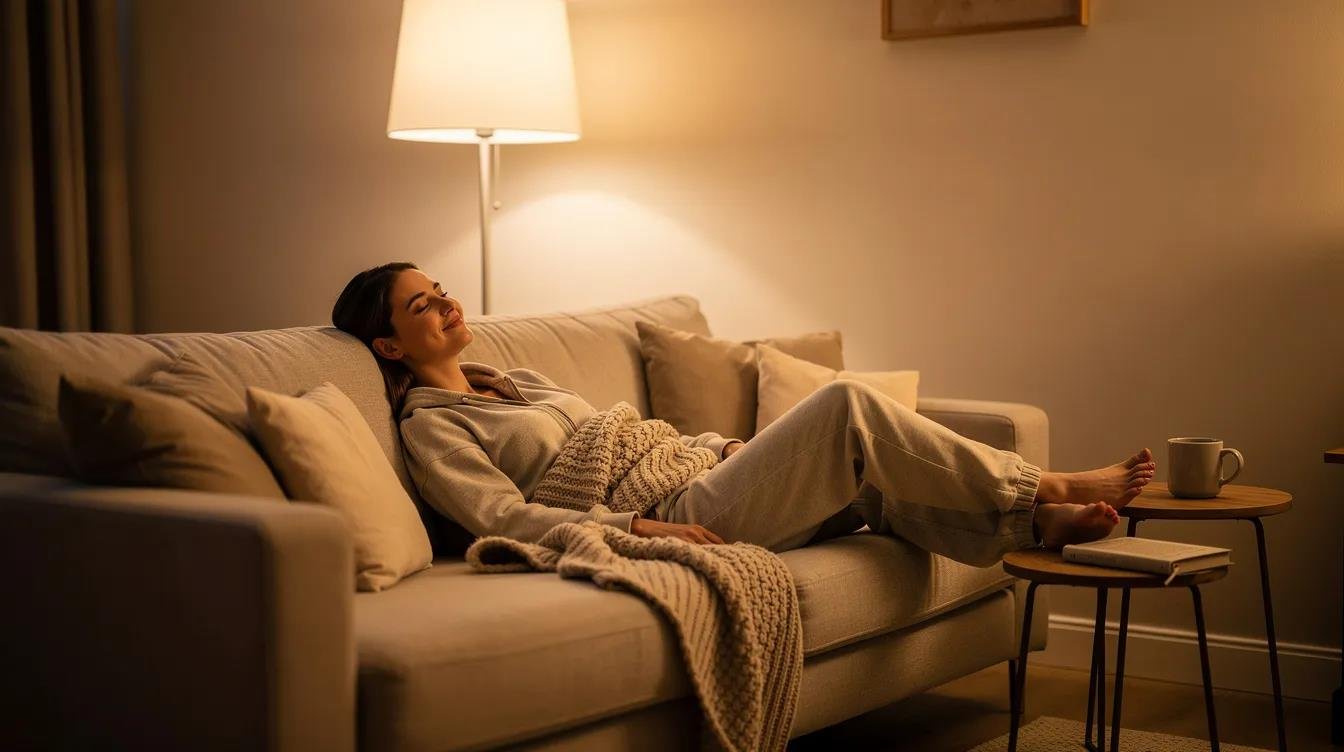
- Use dimmable light or a bedside lamp-harsh overhead lighting works against relaxation.
- Choose a comfortable surface: your bed, a couch, wherever you feel comfortable and safe.
- Grab a soft blanket or towel. Keep the room warm enough that bare skin feels cozy, not chilly.
- Lock the door if you share your space. If you live with roommates or a partner, communicate that you need 30–60 minutes uninterrupted.
An arrival ritual helps your body shift gears. Try five slow breaths, a gentle stretch, or putting on a playlist. Using calming music can help create a better solo play environment-think instrumental, ambient, or whatever tone signals to your nervous system that it is okay to slow down and explore.
No candles, no fancy equipment, no expense required. A locked door, a comfortable surface, and some privacy are enough.
Reconnect With Your Body: Breath, Body Image, and Non-Sexual Touch
Before heading straight for your genitals, it helps to start with non-sexual touch-especially if you struggle with body image, anxiety, or numbness. This is not a delay. It is a warm-up that makes everything after it more pleasurable.
Mindfulness practices can enhance awareness of personal enjoyment. Try this brief grounding exercise:
- Lie down or sit comfortably.
- Feel the weight of your body against the surface beneath you.
- Place one hand on your chest or belly.
- Follow your breath for 1–3 minutes. No need to change it-just notice it.
Staying present enhances the solo play experience. Once you feel settled, begin exploring non-sexual touch slowly: stroke your arms, squeeze your shoulders, run your fingers across your neck, scalp, thighs, or belly. Massage your feet. Move slowly enough to actually notice what each sensation feels like.
Research shows that body image satisfaction directly correlates with orgasmic response in both solo and partnered contexts. If certain body parts bring up discomfort, try offering yourself a neutral or kind thought: "These thighs carry me through my day." You do not have to love every area of your body right now-just practice being aware of it without criticism.
Noticing body signals can guide choices during solo activities. A wide range of feelings may come up: comfort, sadness, irritation, boredom. All are valid. None mean you are doing it wrong. Self-exploration enhances self-awareness and emotional regulation, and that process starts here.
Explore Different Kinds of Touch: Pressure, Rhythm, and Location
Your body often responds differently to small changes in how, where, and how long you touch. Engaging in low-stakes experiments can help you notice personal preferences you never knew existed. This is the heart of discovering what feels good through solo exploration.
Pressure variations to try:
Pressure Level How It Feels Where to Try
Feather-light Barely-there brushing Inner thighs, neck, lower belly
Medium Steady stroking or kneading Arms, chest, genitals (with lube)
Firm Squeezing, pressing, rubbing Buttocks, shoulders, perineum
Rhythm experiments: Try steady strokes, slow circles, pulsing squeezes, or alternating fast-and-slow touch. Experimenting with different speeds can enhance solo play sensations significantly. Aligning touch with your breath adds another layer of awareness.
Location: Exploring erogenous zones can increase pleasure during solo play. Go beyond genitals-try inner thighs, perineum, nipples, lower back, neck, and ears, and explore different parts of the body to compare sensation, pressure, and response. Approach each area with curiosity, not expectation. Exploring new activities helps identify genuine interests.
Solo play is not only about external touch. If it feels welcome and pain-free, you can experiment with gentle internal exploration using your fingers-very slow, with plenty of lube, and only if you feel comfortable. External stimulation first, internal optionally. There is no rush.
Use Feedback, Not Goals, to Guide Your Self Exploration
There is a big difference between a goal-focused session ("I must orgasm quickly") and a feedbackfocused one ("I'm going to notice what increases or decreases my pleasure"). The second approach is where real self discovery happens.
"Feedback" in this context means noticing changes in arousal, comfort, relaxation, tension, emotional states, or mental chatter as you adjust your touch. Research with over 2,200 women found that aligning solo techniques with partnered stimulation predicted higher orgasm frequency, greater pleasure, and fewer difficulties-because they knew what they liked. That knowledge started solo.
Simple micro experiments:
- Touch one area in one way for 30–60 seconds.
- Pause. Change one variable: pressure, rhythm, or location.
- Compare: did sensations increase, decrease, or stay the same?
- Using a scale from 1–10 can help rank pleasurable feelings and build a clearer map over time.
Pause and check in with yourself: "Do I want more, less, or something different right now?" "Does this feel neutral, good, or too intense?" That sense of internal listening is the practice.
Orgasm is welcome but never the end goal. Mapping what feels good-and what does not-is the real success of any session. Self-exploration helps identify personal values and life purpose, including your relationship with your own sexuality.
Optional Toys, Lube, and Sensory Extras
You do not need any equipment to have a fulfilling solo play practice. Your hands and breath are amazing tools on their own. But a few simple additions can expand the kinds of sensations you can experiment with.
Lubricant basics:
- Water-based lube works for most people and is safe with all toy materials.
- Silicone-based lube lasts longer, especially in the shower, but can degrade silicone toys.
- Avoid strong fragrances if your skin is sensitive. Patch test if unsure.
Beginner-friendly toys (no specific brands needed):
- Small external vibrators for clitoral or perineal stimulation
- Simple dildos for gentle internal play
- Masturbation sleeves for different textures and pressure sensations
Sensory extras: A soft scarf, a warm shower, an ice cube, or a heated pack can help you explore temperature and different textures on various body parts. These are fun, low-cost ways to expand your comfort zone.
Safety reminders: Use body-safe materials (medical-grade silicone, glass, stainless steel). Use plenty of lube with internal toys. Clean everything after use. Stop immediately if anything causes pain, numbness, or feels emotionally overwhelming. Consent with yourself is just as real as consent with a partner.
Capture Your Preferences: Simple Journaling and Reflection
Random moments of pleasure become useful knowledge when you write them down. Journaling about activities can reveal recurring themes in personal enjoyment that you would otherwise forget.
A simple post-play ritual: Take 3–5 minutes to jot a few notes right after a session. Use a private journal, a locked note on your phone, or a secure app.
Concrete prompts to reflect on:
- What touch did I try? (Pressure, rhythm, location, toy or no toy)
- What felt especially good? What did not?
- Where did I notice tension, numbness, or ease?
- What fantasies, images, or thinking patterns showed up?
- What might I want to experiment with next time?
Document sensory details to enhance your understanding of what brings joy. Over time, patterns emerge: maybe lighter touch feels better when you are tired, or morning solo play suits you more than late-night sessions. Hormonal cycles, stress levels, and emotional states all affect sensation.
This does not need to be eloquent. Bullet points or a simple "Liked / Didn't like" list is enough. The idea is creating a personal map you can revisit and build on.
Honor Your Limits: Pain, Numbness, and Emotional Overload
Solo exploration should feel fundamentally safe. Discomfort is a message to slow down, change course, or stop-not something to power through.
Physical signals to pay attention to:
- Sharp, burning, or pinching pain → stop and adjust
- Lingering soreness after stopping → too much pressure or not enough lube
- Numbness or "I can't feel much" → reduce speed, add lube, try a longer non-sexual warm-up, or pause for another day
Emotional signals: If shame, memories, or trauma responses surface, ground yourself: slow your breathing, stop touching, sit up, hold something familiar. If these experiences are frequent or distressing, consider working with a trauma-informed, sex-positive therapist. Trauma-informed approaches emphasize safety, pacing, and emotional regulation before pleasure.
Self-exploration can improve communication skills and boundaries-including boundaries with yourself. Respecting your limits, both physical and emotional, is a core act of self love that will deepen your capacity for pleasure over time, not reduce it. There is nothing crazy about needing to stop. That is awareness in action.
Bringing What You Learn Into the Rest of Your Life
The insights you gain from solo play do not stay in the bedroom. They ripple outward.
In partnered sex, you can communicate what you like with real confidence: "I discovered I enjoy slower, lighter touch here" or "I realized I don't love that kind of pressure-can we try this instead?" Pleasure exploration can enhance sexual experiences with partners because you are no longer guessing. You have an answer grounded in your own experience.
Exploring oneself can lead to deeper romantic and platonic relationships. When you know your body and your boundaries, you show up differently with friends, with a partner, and with yourself. Improved body image, a gentler internal voice, and stronger self esteem extend into daily life choices far beyond sex.
Solo exploration is not a one-time project. It is an ongoing relationship with yourself that evolves through different life stages, hormones, and experiences. Embrace the reality that what feels amazing today might shift tomorrow-and that is perfectly fine.
Every small session of curious solo play is part of building a long-term foundation of self trust. Start tonight. Five slow breaths. One touch you have not tried before. See what you figure out.
FAQ
These questions address common worries that were not fully covered above. The answers are educational, not medical advice. If something feels off in your body or emotions, a qualified professional is always the best resource. Feel free to leave a comment if you have additional questions.
Is it normal if I don't feel aroused when I start solo play?
Completely normal. Many people need time, relaxation, and gentle stimulation before arousal shows up. Try extending the non-sexual touch phase, using fantasy or erotic media if that appeals to you, or simply waiting and breathing. Give yourself permission to stop if arousal does not arrive-that is not a failure, it is information. Some days your body is just not in the mood, and that taste of honesty with yourself is part of the process.
How often should I masturbate to "learn what feels good"?
There is no ideal frequency. Focus on quality-present, curious sessions where you actually pay attentionrather than numbers. Whether that is once a week, a few times a month, or multiple times per week, the key is that it feels like fun and self discovery rather than obligation. If it starts to feel compulsive or interferes with daily life, that is worth exploring with a professional.
What if my fantasies during solo play surprise or confuse me?
A wide range of fantasies is common across all genders and orientations. Fantasy does not necessarily reflect what you want in reality. What matters is consent and safety in actual behavior. If certain fantasies cause persistent distress or shame, talking with a therapist who specializes in sexuality can help you make sense of things without judgment.
Can solo play affect my relationship with a partner?
Solo play usually complements partnered sex rather than replacing it. It helps you communicate desires more clearly because you have done the work of discovering what different ways of touch feel like. If a partner feels insecure, frame solo exploration as self care that benefits both of you-similar to exercising or practicing mindfulness on your own to show up better in shared aspects of life.
When should I talk to a doctor or therapist about my solo exploration?
Seek professional support if you experience ongoing genital pain, bleeding, persistent numbness, or if a history of sexual trauma feels activated during solo play. Also reach out if the behavior feels compulsive or out of control. Specialized, sex-positive professionals exist for exactly these situations, and reaching out is a sign of strength, not weakness.